Visa-free travel for Ukrainians is not being abolished, but new rules for travelling to Europe have already been approved: to enter EU countries, you will need to obtain an ETIAS electronic travel authorisation in advance.
Based on official EU documents, we explain what ETIAS is, when the system will launch, how much an application costs, who does not need an authorisation at all and how to apply without intermediaries.
What ETIAS is and how it differs from a visa
ETIAS (European Travel Information and Authorisation System) is an electronic authorisation to enter the Schengen area for citizens of Ukraine and other countries who do not need a visa for the EU.
No consulate visit, certificates or biometrics are required: the form is completed online. The system runs a pre-screening check, comparing the applicant’s details against databases and confirming that there are no restrictions on entry.
ETIAS does not guarantee entry: the final decision rests with the border control officers.
When ETIAS will start for Ukrainians
It is not yet known. As of mid-August 2026, the European Commission states the position plainly.
The system is not operational and applications for authorisations are not being accepted. The EU will announce the exact date a few months before the launch.
The earlier target date — by the end of 2026 — had been dropped by August, so any articles that still cite it are relying on a withdrawn timetable.
First, there will be a transition period of at least six months: you will not be refused entry without ETIAS as long as all other conditions are met. This will be followed by a grace period of another six months for those crossing the border for the first time.
The dates have been pushed back more than once: the launch was scheduled for 2021, then for 2022. Only official announcements can be relied on.
Which Ukrainians need an authorisation and which do not
It will be required for anyone travelling visa-free for a short stay — tourism, visiting friends or family, business meetings, medical treatment. This applies to most holders of biometric passports.
You do not need ETIAS if you are:
- a holder of a residence permit or residence card of an EU country, including Ukrainians with temporary protection status;
- a holder of a valid Schengen visa or a national long-stay visa;
- a family member of an EU citizen with a residence card;
- a Ukrainian citizen without a biometric passport — in this case you need a visa.
Temporary protection in host countries has been extended until 4 March 2028.
How much ETIAS costs and who is exempt from the fee
The entry fee for the EU will be 20 euros. The previously announced 7 euros was replaced by Commission Delegated Regulation (EU) 2025/1411 of 16 July 2025, which attributed the increase to system costs and inflation.
Travellers under 18 or over 70, as well as family members of EU citizens, will not have to pay. However, they still need to submit an application.
The fee for the electronic authorisation is paid online when you submit your application. You pay for the processing, not for the outcome: if the authorisation is refused, the money is not refunded.
The official ETIAS website and copycat sites
There is only one official portal — europa.eu/etias. Only there will your application be processed for the standard fee; a mobile app will also be released by the European Union.
Intermediary websites have already sprung up around ETIAS: they copy the layout and logo, add a mark-up and collect personal data. Telling them apart is easy: the addresses of genuine European Union services end in europa.eu.
How to apply for an ETIAS authorisation
The application in the new system is made online. You will need a biometric passport valid for at least another three months, an email address and a bank card.
The form asks for:
- your name, date and place of birth, nationality, home address and contact details;
- passport details: number, issuing authority and date of issue;
- your level of education and employment details;
- the country of first entry;
- mandatory declarations about criminal records and travel to conflict zones.
In most cases, you will receive a response within a few minutes. If your application is checked manually, a decision will be issued within four days at the latest, within 14 days if additional documents are requested, and within 30 days if you are invited to an interview.
That is why it is worth applying well in advance. A mistake in your name or passport number makes the check you have already paid for worthless.
ETIAS validity and the 90/180 rule
ETIAS will be valid for up to three years or until your passport expires, whichever comes first. You will not need to apply before every trip: you can make as many trips as you like during this period.
A new passport means a new application, as the authorisation is linked to the document, not to the person.
The rules on length of stay remain the same: once you have entered, you can stay in the Schengen area visa-free for up to 90 days in any 180-day period. ETIAS does not allow you to work, study or live in Europe permanently: for that you need a national visa.
Which countries require ETIAS
ETIAS is valid in all 30 European countries and allows entry to the Schengen area countries and Cyprus — you do not need a separate authorisation for each one. Ireland is not on the list, as it has its own visa policy.
Days spent in Cyprus are counted separately from Schengen days, as the island is not yet part of the Schengen area.
What has already changed at the border
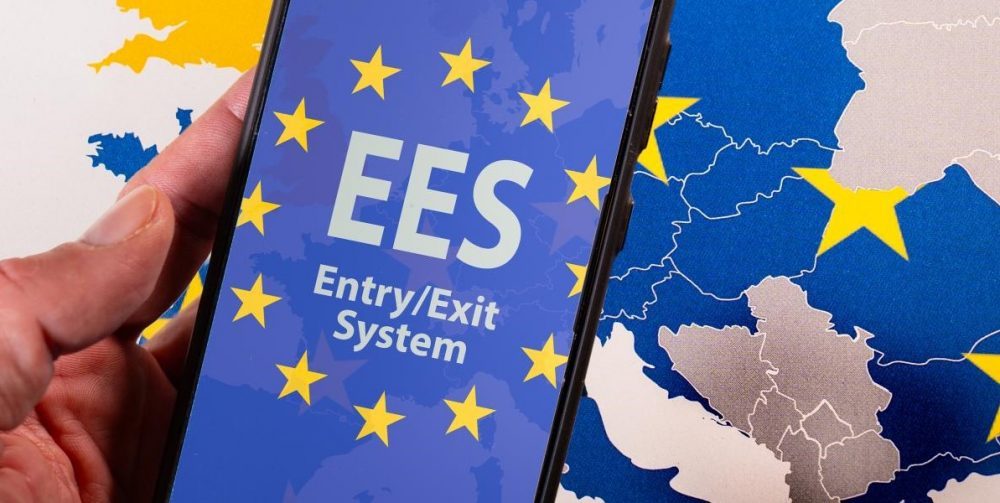
While ETIAS is still being prepared, a different system is in operation at the Schengen area’s external borders — the electronic Entry/Exit System, EES. It was introduced on 12 October 2025 and has been mandatory at all border crossings since 10 April 2026.
The system is free of charge and replaces passport stamps: at the checkpoint, travellers have their fingerprints and a facial image taken, the time of each border crossing is recorded and the days used are counted.
The two systems are easy to confuse, although they serve different purposes.
| Feature | EES | ETIAS |
| What it is | border control | pre-travel authorisation |
| Status | launched in 2025 | not yet launched |
| Cost | free | 20 euros |
| Countries | 29 | 30 |
| Where it is done | at the border | online before departure |